Dust control on job sites
Dust is easier to stop at the tool than to clean up afterwards. These are the practical steps most crews follow.
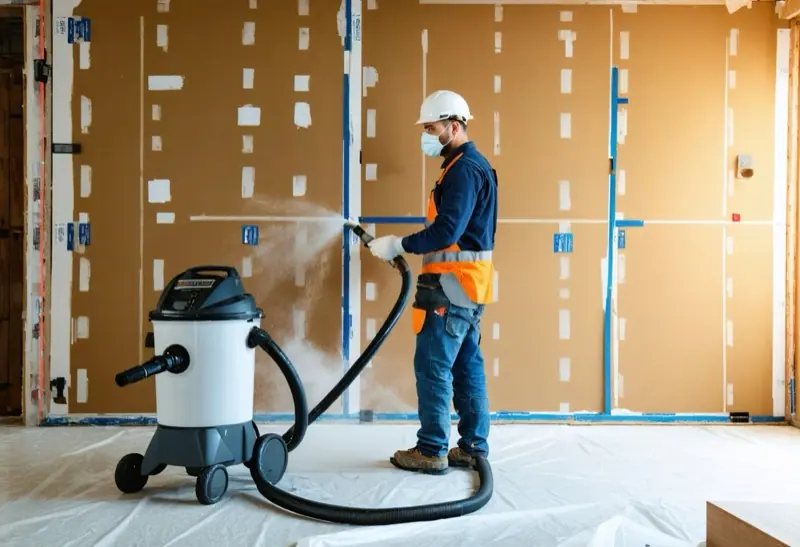
Four steps
Capture at the source
Connect a HEPA dust extractor to the sander, grinder or saw so dust is pulled in as it is made.
Seal the work area
Close doors, cover vents and hang plastic sheeting to keep dust in the room.
Clean as you go
Vacuum surfaces during the work, not only at the end. Do not dry sweep with a broom: it puts dust back in the air.
Wear the right protection
A vacuum does not replace a respirator. Use one that suits the dust.
Dust from cutting, grinding and drilling concrete and masonry can contain crystalline silica. Rules for controlling it differ by province. Check with your site safety officer or provincial authority before you start.
Pick the right machine
Use a HEPA dust extractor for fine dust. Use a wet/dry vacuum for debris and water. Use a floor sweeper for coarse debris on large floors. See how to choose a vacuum.
Tell us what you need
We reply by email with a quote.